
Diving into Pillar 1: Home Equity & Second Mortgages, this introduction sets the stage for an insightful exploration of the topic. From understanding home equity loans to delving into second mortgages, this overview aims to captivate readers with its informative yet engaging approach.
Providing practical examples and discussing the pros and cons of these financial tools, this content aims to shed light on how individuals can leverage their home equity for various purposes.
Home Equity Loans
 Home equity loans allow homeowners to borrow against the equity in their property, which is the difference between the home's market value and the outstanding balance on the mortgage.
Examples of Uses
- Home Renovations: Many homeowners use home equity loans to fund renovations or improvements on their property, increasing the value of their home.
- Debt Consolidation: Homeowners may consolidate high-interest debt, such as credit card balances, by using a home equity loan to pay off these debts.
- Education Expenses: Some homeowners use home equity loans to cover the cost of their children's education or their own further education.
Advantages and Disadvantages
- Advantages:
- Lower Interest Rates: Home equity loans typically have lower interest rates compared to other forms of credit, making them a cost-effective borrowing option.
- Tax Deductible Interest: In some cases, the interest paid on a home equity loan may be tax-deductible, offering potential savings for homeowners.
- Larger Loan Amounts: Home equity loans allow homeowners to borrow larger sums of money compared to other types of loans.
- Disadvantages:
- Risk of Foreclosure: If homeowners are unable to repay the loan, they risk losing their home through foreclosure, as it is used as collateral for the loan.
- Additional Debt: Taking out a home equity loan adds to the overall debt burden of the homeowner, which can lead to financial strain if not managed properly.
- Closing Costs: Home equity loans may come with closing costs and fees, which can add to the overall cost of borrowing.
Second Mortgages
A second mortgage is a type of loan that allows homeowners to borrow money using their home as collateral, in addition to their primary mortgage. This means that if the borrower defaults on the loan, the lender has the right to foreclose on the property to recover the outstanding debt.
People opt for second mortgages for various reasons, including funding home renovations, consolidating high-interest debt, covering unexpected expenses, or investing in other properties. It can also be used to access cash without having to refinance the primary mortgage.
Differences between a Second Mortgage and a Home Equity Loan
- A second mortgage is a separate loan taken in addition to the primary mortgage, while a home equity loan is a single lump sum borrowed against the equity in the home.
- Second mortgages typically have higher interest rates compared to home equity loans due to the increased risk for lenders.
- Home equity loans are disbursed in a single lump sum, while second mortgages can be accessed as a lump sum, or as a line of credit or in installments.
- Second mortgages are considered riskier for borrowers as they put their home at stake for an additional loan, while home equity loans do not affect the primary mortgage.
Home Equity Line of Credit (HELOC)
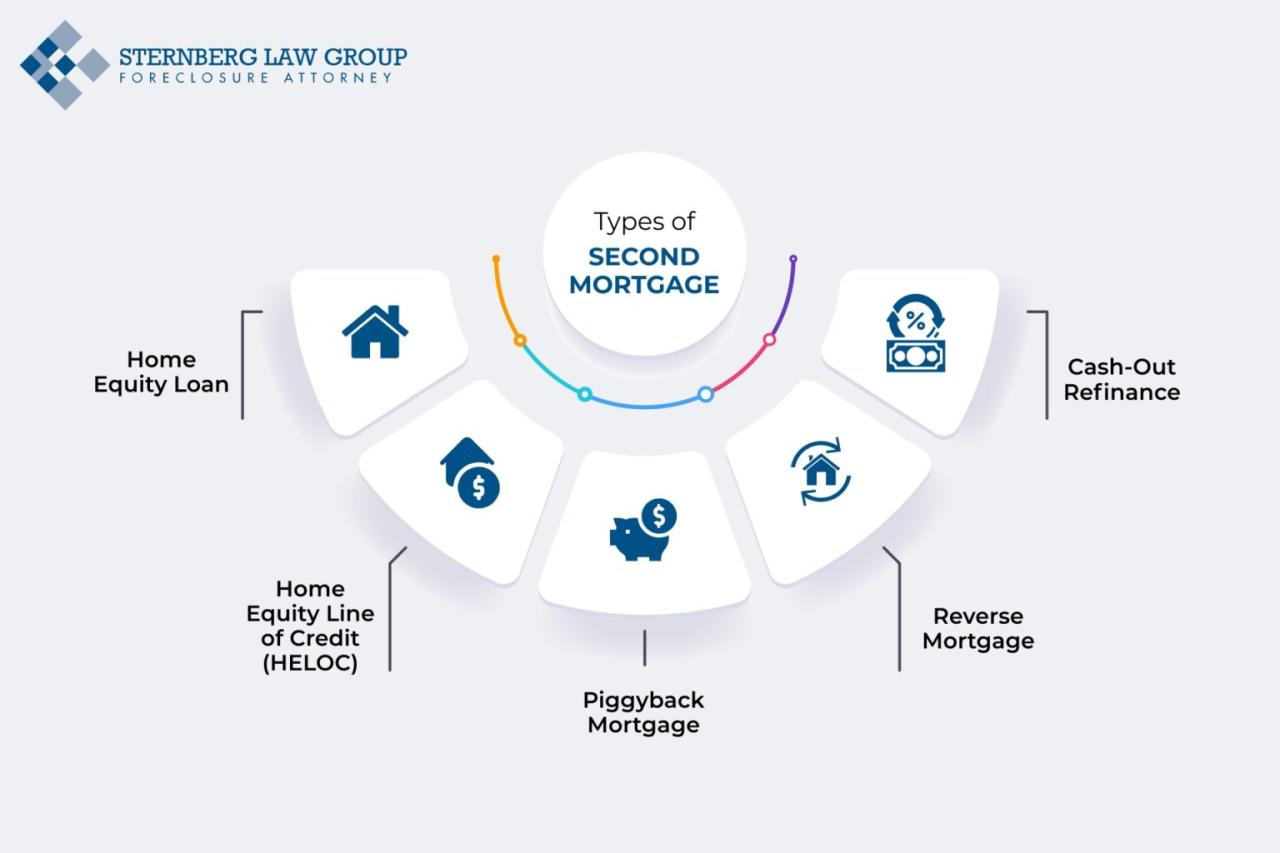 A Home Equity Line of Credit (HELOC) is a type of loan that allows homeowners to borrow against the equity in their homes. Unlike a traditional home equity loan, a HELOC works more like a credit card where you have a line of credit that you can draw from as needed, up to a certain limit.
Features and Benefits of a HELOC
- Flexibility: With a HELOC, you can borrow only the amount you need, when you need it, instead of taking a lump sum upfront.
- Lower interest rates: HELOCs typically have lower interest rates compared to credit cards or personal loans.
- Tax-deductible interest: In some cases, the interest paid on a HELOC may be tax-deductible, making it a cost-effective borrowing option.
- Revolving credit: As you pay off the balance, the credit becomes available for you to borrow again, providing ongoing access to funds.
How a HELOC Works Compared to a Traditional Home Equity Loan
A traditional home equity loan provides a lump sum of money upfront, while a HELOC allows you to borrow funds as needed, up to a certain limit. With a HELOC, you only pay interest on the amount you borrow, not the total credit line available. Additionally, the repayment terms for a HELOC are more flexible, as you can pay back the borrowed amount and borrow again during the draw period.Situations Where a HELOC Would Be a Better Option than a Second Mortgage
- Home renovations: If you have ongoing renovation projects with varying costs, a HELOC can provide the flexibility to borrow funds as needed.
- Emergency expenses: In case of unexpected expenses, having a HELOC can serve as a safety net for quick access to funds without committing to a fixed loan amount.
- Debt consolidation: If you have high-interest debt that you want to consolidate, a HELOC with lower interest rates can be a cost-effective solution.
Risks and Considerations
When considering using home equity or second mortgages, it's crucial to be aware of the potential risks involved. These financial decisions can have long-term implications on your financial well-being, so it's important to weigh the risks against the benefits carefully.Potential Risks Associated
- Foreclosure Risk: If you fail to make payments on a home equity loan or second mortgage, you risk losing your home through foreclosure.
- Increased Debt Burden: Taking on additional debt through home equity financing can lead to a higher debt burden and financial strain.
- Interest Rate Fluctuations: Home equity loans and second mortgages often come with variable interest rates, which can increase over time, leading to higher monthly payments.
Factors to Consider Before Deciding
- Loan Terms: Understand the terms of the home equity loan or second mortgage, including interest rates, repayment period, and any fees involved.
- Financial Stability: Assess your current financial situation and stability to determine if taking on additional debt is a feasible option.
- Home Equity Value: Consider the current value of your home and how much equity you have available to borrow against.
Tips to Mitigate Risks
- Only Borrow What You Need: Avoid borrowing more than you can afford to repay, and use the funds for necessary expenses or investments.
- Regularly Monitor Your Finances: Keep track of your finances and ensure you have a plan in place to make timely payments on your home equity loan or second mortgage.
- Consider Fixed-Rate Options: If possible, opt for a fixed-rate home equity loan to avoid potential interest rate fluctuations in the future.
End of Discussion
In conclusion, Pillar 1: Home Equity & Second Mortgages unveils the intricacies of tapping into home equity and second mortgages. By weighing the risks, benefits, and considerations Artikeld, individuals can make informed decisions when considering these financial options.
FAQ Corner
What are the common reasons people opt for second mortgages?
People often choose second mortgages to fund major expenses like home renovations, debt consolidation, or education costs.
How does a HELOC work compared to a traditional home equity loan?
A HELOC operates as a revolving line of credit, allowing borrowers to withdraw funds as needed, while a traditional home equity loan provides a lump sum upfront.
What factors should individuals consider before taking out a home equity loan or a second mortgage?
Before opting for these financial tools, individuals should assess their financial goals, repayment capacity, interest rates, and potential risks involved.
How can one mitigate risks when using home equity for financing?
To reduce risks, individuals can limit borrowing to what is necessary, stay informed about market trends, and explore alternative financing options.